

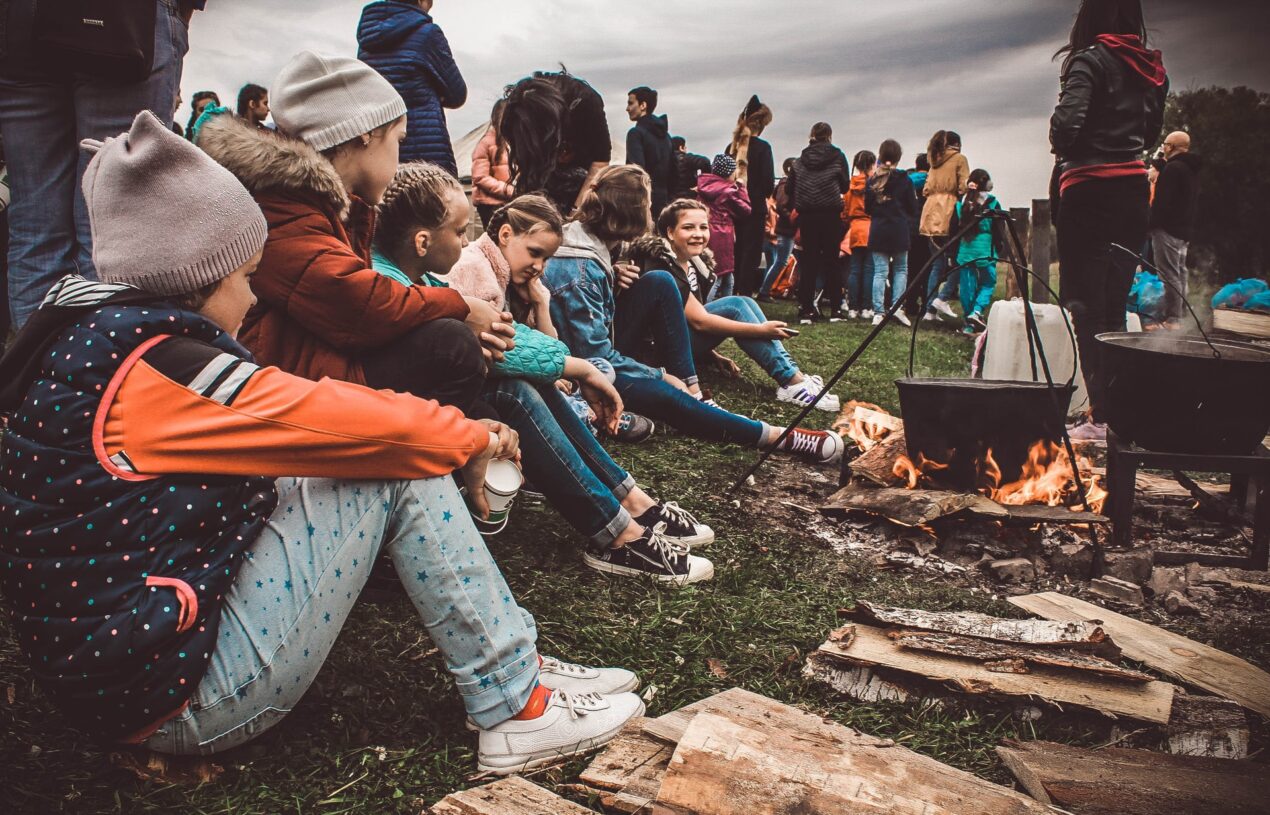
The refugee theme has been a subject of debate for a long time in the political sphere and a subject of discussion for all of us. In these discussions, there are always two camps: those that sustain the refugees and those that do not. Many people choose not to support them because of the information received from the mass – media. The information is often false or manipulated and, most importantly, it does not indicate what it means to be a refugee. So, let’s begin by clarifying what a refugee is.
According to the UN Refugee Agency, a refugee is a person that ran away from the war, violence, or persecution that threatened him in his country. To overcome these dangers, the person crosses the borders of his country, sometimes passing through several countries until reaching one that can guarantee his basic need: safety. The refugee status is granted through a legal process in which the state verifies whether the person’s life is indeed endangered in its country of origin.
Still, many of us do not know what their lives are like, but we continue to blame them for all our shortcomings, difficulties, drawbacks, and problems.
Let’s take a look into a refugee life to better understand their situation.
In 2014 Christina Nuñez worked with several refugees in Salt Lake City, USA and she managed to understand the difficulties they were going through. At first, one of their major problems was leaving their home. Some of them did not have a chance to take any clothes or, even worse, they lost some of their family members. Then, getting over the problems they faced on the road while trying to reach the host country, once they obtain the refugee title they face other issues like language problems, the difficulty of raising kids, work security, finding an acceptable place to live, fear of accessing services, transportation, and cultural problems.
The refugees do not feel at home in the host country. In the first place, they feel like they have no rights because it is not their country, they don’t know the language, don’t know the laws, and they believe they have no rights. For this reason, they are easy targets in various deceptive structures that hire them without employment contracts, pay them below legal limits, their basic conditions of work safety are not respected and sometimes they are not paid and maybe abused. Their lives are not easy and in addition to the difficulty of ensuring their basic needs, there are also cultural problems that make their lives even harder.
Each nation has a culture – a specific way of life with particular customs and beliefs – shaped by its historical experiences, recorded and rendered through music, theatre, literature, art, etc.
The refugees have great difficulty integrating within the society of the host country because of its lack of tolerance for refugee culture. This is one of the main reasons why many people are against and afraid of refugees and immigrants of any kind. We will explain why this resistance and fear are unfounded, why they have no real reasons.
First of all, it is not their fault their country went into a war or that their efforts of turning their society into democracy are paid with execution.
The wars are often encouraged by the developed countries that produce arms or, even more, trigger the war. We all know why, but most of us avoid saying it – it is for the interest of natural resources. If a country with many natural resources was left to develop on its own, there would be a great possibility for that country to develop very fast due to those resources. Its political powers would probably become more stable, and it would be impossible for the superpowers to control the natural resources in that country.
In 2004 Joanna Zylinska claimed that we are somewhat responsible for the fact that they are now coming and seeking refuge. For example, we can look at the Iraqi refugees that came to Europe and the USA. They were threatened by the Western bombs, and that’s why they got to come to the USA, Britain, Australia, etc.
This should make us think whether we have directed our anger and discontent in the right direction.
Although European countries, with some exceptions, and their allies have been active participants in the Iraqi and the Syrian wars, they took skeptical positions in every refugee crisis:
- Bulgaria has sent the gendarmerie to guard the borders from refugees.
- Australia showed its attitude towards refugees in 2014 while launching the campaign against asylum seekers by using the slogan “no way, they will not make Australia home!”.
- Italy was also very skeptical about receiving refugees, saying that it will not be “Europe’s refugee camp”.
- The above attitude was also taken by Hungary, Poland, Latvia, Croatia, and others.
- Officially, Romania has accepted refugees, but the recent events in Ditrau have shown the lack of tolerance the locals have towards citizens of other races, cultures,s or religions.
It seems easy to have such an attitude when you are not a refugee, but let’s go back a few years and see the situation from a different perspective. We will take Romania as a case study to prove our point. In 1989 Romania started the mass emigration. The first wave of emigration was of 100 thousand Romanians that went to Germany and established there permanently. Then in 2016, almost three million Romanians were temporarily or permanently established in the western EU countries and the USA. In 2019 at the parliamentary elections, the officials confirmed that 9.7 million Romanians are established in foreign countries or temporarily working there. Now, the first wave of emigrants can be explained because, after the communist regime, the people faced hard times. However, after 2003 they faced no hunger, no war, or executions but still, they went to a country with a better economy for better-paid work. We will not blame the Romanians for doing so because they may still have good reasons for emigration and they are not the only ones emigrating in mass. But the Romanians were also often illegally working in a European state, deceived and underpaid by their employers, humiliated by the locals. So did they forget that? Or is it easier to be the one with the knife – the one who cuts not the one who takes what was cut?
In conclusion, we want to emphasize that it is not our merit that we were born in a conflict-free region, and it is not the refugees’ fault that their lives are threatened in their countries. Let’s learn to be more tolerant with the refugees. We may never know how history will turn and if we will be always the ones who cut and not the opposite.
Behave with others as you would like others to behave with you.
Sources:
Cambridge Dictionary. (2020, 01 01). Culture. Retrieved 05 15, 2020, from Cambridge Dictionary: https://dictionary.cambridge.org/dictionary/english/culture
Cienski J. (2017, 05 21). Why Poland doesn’t want refugees. Retrieved 05 15, 2020, from Politico: politico.eu/article/politics-nationalism-and-religion-explain-why-poland-doesnt-want-refugees/
Connelly A. (2019, 12 06). Croatia Is Abusing Migrants While the EU Turns a Blind Eye. Retrieved 05 15, 2020, from Foreign Policy: foreignpolicy.com/2019/12/06/croatia-is-abusing-migrants-while-the-eu-turns-a-blind-eye/
Gotev G. (2020, 02 28). Bulgaria sends gendarmerie to border, as fears rise of migrant wave from Turkey. Retrieved 05 15, 2020, from Euractiv: euractiv.com/section/global-europe/news/bulgaria-sends-gendarmerie-to-border-as-fears-of-migrant-wave-from-turke y-escalate/
Martin G. (2015). Stop the boats! Moral panic in Australia over asylum seekers. Continuum, vol.29, no.3, 304-322.
McGrath S. (2020, 03 08). Romania racism row: Bakers from Sri Lanka feel the heat. Retrieved 05 15, 2020, from BBC: bbc.com/news/world-europe-51641941
Reuters. (2018, 06 04). Italy will no longer be “Europe’s refugee camp,” vows new government. Retrieved 05 15, 2020, from Reuters: reuters.com/article/italy-politics/italy-will-no-longe r-be-europes-refugee-camp-vows-new-government-idUSL5N1T62BN
Steadman J. (2019, 07 12). What is the definition of a refugee? Retrieved 05 15, 2020, from Help Refugees: helprefugees.org/news/what-is-a-refugee-the-definition-of-refugee-explained/ ?gclid=Cj0KCQjw-_j1BRDkARIsAJcfmTF4MYiaQQM1Gb63UYTKN8xr3goyaX7xv2 wx8Z99iM2Y7ao4VHNdypgaAoMcEALw_wcB
Sandu D. (2018). Migrația temporară în străinătate. In Ghețău V., Demografia României (pp. 222-224). Bucharest: Romanian Academy Publishing House
UNHCR. (2018, 01 30). Refugees in Latvia still in lack of support. Retrieved 05 16, 2020, from UNHCR Nothern Europe: unhcr.org/neu/16761-refugees-in-latvia-still-in-lack-of-support .html
UNHCR. (2019, 01 01). What is a refugee? Retrieved 05 15, 2020, from The UN Refugee Agency: unhcr.org/afr/what-is-a-refugee.html
Walker S. (2018, 06 04). No entry: Hungary’s crackdown on helping refugees. Retrieved 05 15, 2020, from The Guardian: theguardian.com/world/2018/jun/04/no-entry-hungarys-crack down-on-helping-refugees
Zylinska J. (2004b). Guns n’ Rappers: Moral Panics and the Ethics of Cultural Studies. Culture Machine, no.6, culturemachine.net/deconstruction-is-in-cultural-studies/guns-n-rappers/