


We can be very different not only when it comes to how we look, but also when we see and judge the things around us. In order to understand where these differences come from, let us focus on a few examples that are a little more complex than those discussed in the previous article.
As I mentioned other times, the way we see things is strongly influenced by the experience accumulated in everyday life. But to demonstrate this we will go through the first example step by step.
In this case, we have two people: one who lived his whole life in a village. As a small child, he lived in this environment, where he had dogs, who were his friends. Consequently, this man will see dogs as kind beings because of his great memories with dogs.

On the other hand, we have a person, who also lived in a village, but who had the misfortune of encountering a bad dog when he was riding his bicycle on the way home. If this dog seemed aggressive, if it bit him and pulled his pants, then a state of alarm was triggered in his head in an attempt to avoid harm and survive. In this state, which is perfectly normal, our brain records information at the subconscious level. This means that in the future, every time this person will see a dog, he will automatically try to protect himself, and only after he feels safe he will be able to correct his behavior by imposing conscious actions. Thus, every time this person sees a dog, he will most likely avoid them, be afraid of them, and remember how dangerous they are.
In this case, we have two people with two different perspectives on the dog. Their personal experiences made them see dogs in totally different ways, and consequently, each of them behaves differently in relation to dogs.
Starting from this example, let us move towards a broader illustration of the differences in the perception of reality. In this example we will talk about two people who lived in Ceausescu’s communist regime; both in the same country, same city, just different jobs. Let’s see…
The first person is a party member, a politician, supporter of the regime, who received various benefits throughout his life, such as a good house, a high salary, access to various services, and so on.
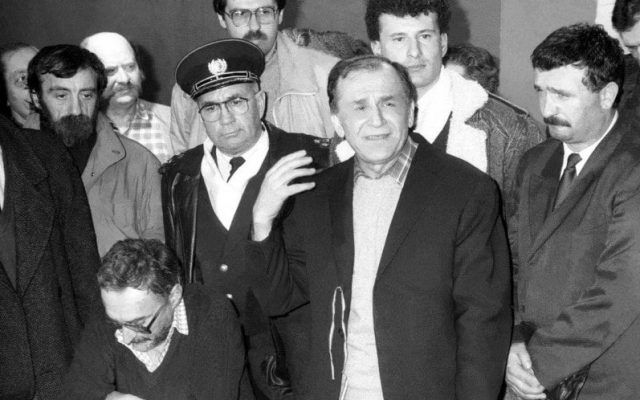
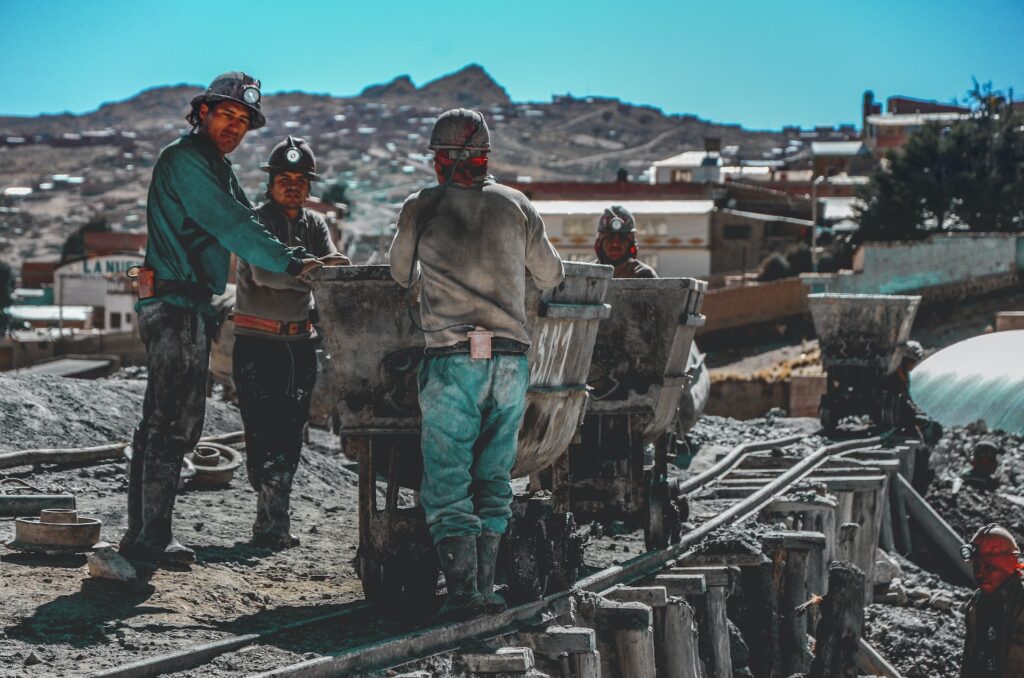
The second person is a miner, who worked in the mine all his life, with a low salary, limited access to food products, major control over his personal and family life, etc.
After the change of the regime, if we ask both people to describe communism- the man who benefited from the regime will probably tell us about how good communism was (since for him and his family it really was really good because his family had a great home and a big salary for a relatively small amount of work). On the other hand, the miner will probably say that the regime was bad because he barely had access to food.
But let’s take the imagination exercise a little further, and think: what would probably say the miner if we asked him to compare the communist regime with the one that followed? Given the history, he will probably make no big difference between the regimes if his life hasn’t changed too much. That is: if after the fall of communism the miner has an equally low salary compared to market prices, if he does not allow a lifestyle change, if the working method is somewhat the same, and every day he leaves the mine with the same tired and dirty hands, if he arrives at the same old and broken brick house, and if the money is only enough to live from one month to another, then the miner will probably say that both regimes are bad because neither of them brought a better life.
What we see from this example is that although we believe we all live in the same country, in the same regime, and have the same experiences, things are not quite like that and each of us sees life as harder or easier.
Although the state officials, followers of the new regime, feel a big change in their lifestyle because their salary increase was reported to their initial salary; for people who had a low initial salary, the increase is not much. So if we ask a politician from the new political system and a sweeper if the democratic regime brought a big change in their daily life, the politician will probably say yes, while the sweeper remained a sweeper, with a low salary subjected to taxes.
From here we can easily see that everyone’s experiences have shaped different individual perspectives on reality. Starting from this example, we ask ourselves is we see so differently the physical reality and the one constructed by society too?
An answer to this question you can find in my book “The new social reality of the Europeans: a constructivist view over Europeanization”, which you can find on Amazon at the following link: https://www.amazon.com/dp/B0B2KT5DQY
This article is available as a podcast on the following link:https://spotifyanchor-web.app.link/e/mGyzgx6PHsb