

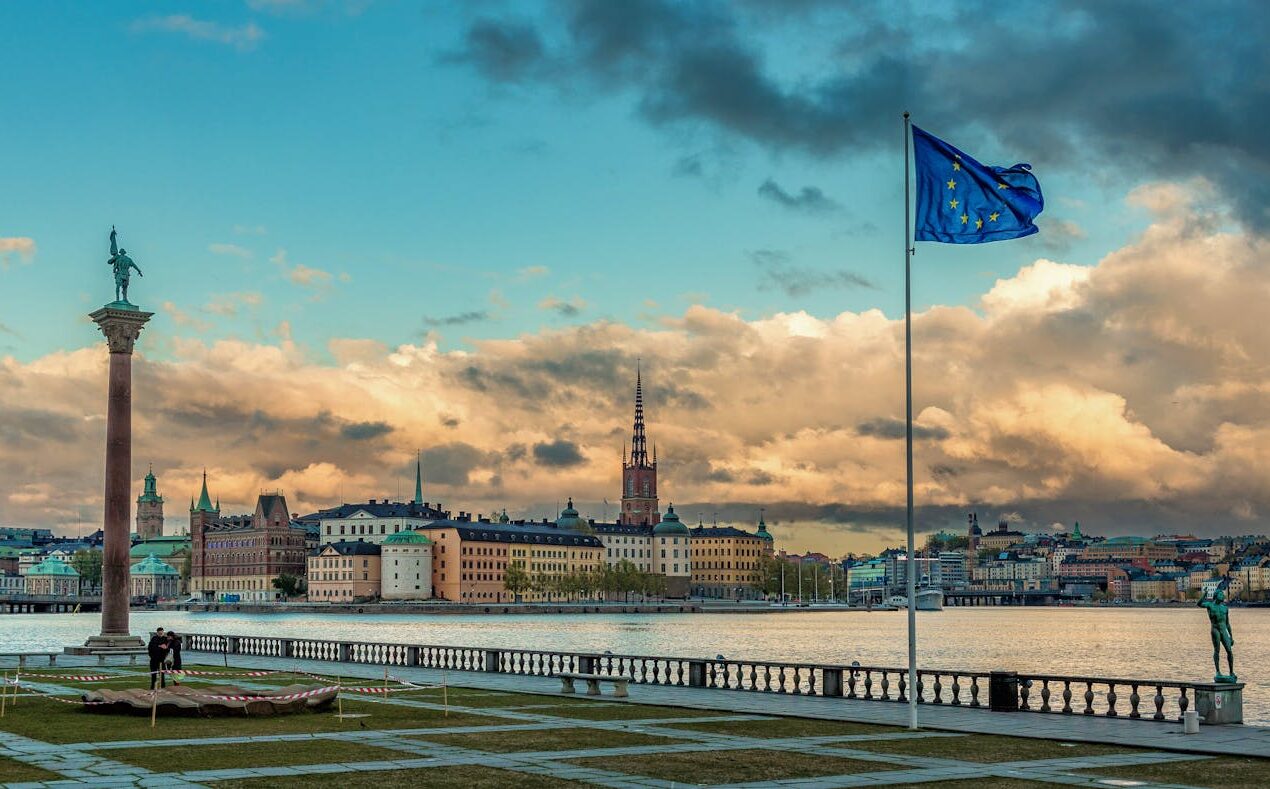
The idea of a united Europe got the Europeans’ attention, especially in 1712 when the “Project for the Perpetuation of Eternal Peace” was proposed by the abbot Saint-Pierre. This project discussed the need for a “permanent European society” to ensure a peaceful coexistence of the European states. For this, it was necessary to initiate a United Nations congress that would have founded the United Nations Society (Barbulescu 2015). However, this idea became a reality only after WWII, when the European states had to work together for economic recovery.

Throughout the years, Europe has shown it has a mixed model of governance – a combination of supranational and national governance. This initiated the European integration theories, which tried to explain the European reality in different ways. The intergovernmentalists sustained that the EU is not a model of supranational governance but rather a different model of international collaboration. Their arguments point towards the Council of the EU (Smeets, Zaun 2020), consisting of government ministers, the activity of which is mostly at the national level, which reunites periodically in the Council to make decisions based on the national political agenda. Furthermore, the intergovernmentalists do not see the European Parliament as a supranational institution either, given that there are national politicians who do politics at the EU level while adhering to the ideologies of their national parties.

The biggest obstacle to European unity has always been the nationalist pride and ideologies that led to the outbreak of wars. To overcome this, Europe has built the European Union. As a new construct, neither international nor federal, the European Union triggered a process of change on the European continent that only the optimistic and the federalists believed could be achieved, namely, European governance. This kind of governance was seen at the beginning as something akin to international collaboration and nothing more. Nevertheless, it triggered new processes in Europe, the reason why, for years, researchers have tried to understand what Europe is heading for.
Since 1948 at the Hague Congress, it was mentioned that “the time has come for the European states to cede their sovereign rights in order to make it possible to exercise them together from now on” (Truyol y Serra 1972, apud Barbulescu 2015, p.49). In spite of this, the EU still cannot be seen as a federalist project without having a federalist model of organization.
Meanwhile, the new intergovernmentalists argue that European governance is about “consensus-seeking deliberation and the creation of new regulatory bodies in which the states have a shared authority and joint control at the EU level” (Schmidt 2016, p. 9).
Despite this, federalists believe that “the nation states lost their property rights since they were unable to guarantee the economic and political security of their citizens” (Spinelli 1972, apud Bergman and Gutenberg 2013). In response, the Lisbon Treaty required the nation-states to incorporate into their constitutions the responsibility of complying with the Treaties of the Union. But then, Brexit turned the topic on the other side, highlighting states’ capacity to take the lead.
To clarify how governance happens in Europe, the multi-level governance approach argues that governance involves sharing governing power across multiple levels: “a central government and a tier of non-intersecting subcentral governments” (Marks and Hooghe 2004, apud Stein and Turkewitsch 2008). In the same line, Sandholtz and Stone (2012) argue that EU governance involves a shared authority in policymaking, which includes not only national governments but also European institutions and sub-national authorities.
Contrary to this, Hooghe and Marks (2004) show that multilevel governance is unable to explain the European reality, considering that multilevel governance is a result of European integration.
In this case, most researchers turn to the neo-functionalist approach, which argues that the spillover effect is the primary reason Europe adopted this type of governance. Economic cooperation served as the first domino that triggered a chain reaction, influencing the governance model.
Neo-functionalism focuses on non-state actors and their power to interfere in governance. So, they sustain that the transactors are more influential in the decision-making than we believe them to be. They “seek to exchange goods, services, ideas, standards, and dispute resolution mechanisms” (Sandholtz, Stone and Sweet 2012, pp.9-10) and from here their need of a supranational governance that would ease the activity of the transnational businesses’ by applying a single set of rules in the whole common European market. In this direction, Haas predicted that we will witness the emergence of supranational governing bodies that would be empowered to establish new rules, strengthen the existing ones, and help solve any disputes.
Thus, neo-functionalism acknowledges that the EU exerts top-down power over nation-states, with its authority deriving from the European Court of Justice, which subordinates national governments to European treaties and strengthens the powers of the European Commission (Sandholtz, Stone and Sweet 2012).
In spite of all explanations, neofunctionalism has a hard time explaining the functioning of the European Communities and the European governance before the Maastricht treaty. It is the functionalist theory, or liberal intergovernmentalism, that gives us an answer in this direction.
From this point, we understand that it is difficult to explain contemporary European governance and highlight that there is a need for a new approach to explain the existence of two types of governance, their correlation, and the phenomenon of interrupted and paused supranational and national governance during crises or moments with a high intensity of change.
Sources:
- Barbulescu I. G. (2015). Noua Europa. Bucharest: Polirom.
- Smeets S. and Zaun N. (2020). What is intergovernmental about the EU’s (new) intergovernmentalist turn? Evidence from the Eurozone and asylum crises. West European Politics, 44(4), 862-872. doi.org/10.1080/01402382.2020.1792203
- Schmidt V. (2016). The ‘new’ EU governance: ‘new’ intergovernmentalism versus ‘new’ supranationalism plus ‘new’ parliamentarism. Les Chaiers du CEVIPOL, 5(5), 5-31.
- Bergman J. and Gutenberg J. (2013). Theories of European Integration and Their Contribution to the Study of European Foreign Policy. Paper presented at the 8th Pan-European Conference on International Relations, Warsaw, 1-23.
- Stein M. and Turkewitsch L. (2008). The Concept of Multi-level Governance in Studies of Federalism. Article presented at the International Political Science Association (IPSA) International Conference, Montréal, 1-35.
- Sandholtz W. and Stone Sweet A. (2012). Neo-functionalism and supranational governance. In E. Jones, A. Menon, S. Weathrill (eds.), Oxford Handbook of the European Union, Oxford: Oxford University Press.